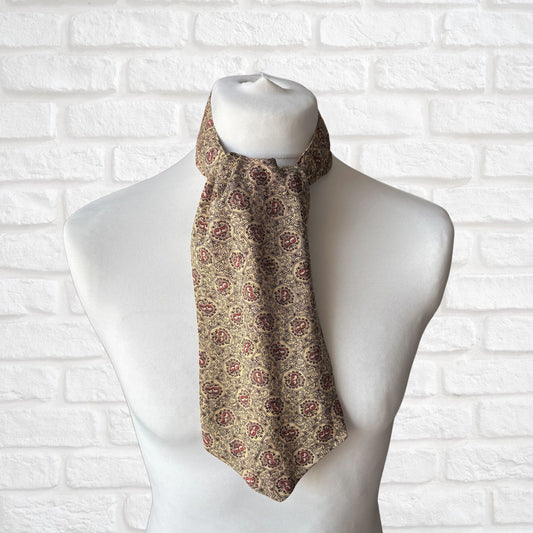

The Darling of the Dandy - In Praise of the Cravat
So cravats ? What are your thoughts ? Strictly a wedding only situation or an everyday outfit upgrade ?
It’s clear that there are a lot of fans out there as these dandies of the vintage neckwear world are one of my best sellers. For me, it is easy to see why they are so popular, the quality of the vintage cravats from the likes of Tootal and Duggie is superb and the huge variety of colours and patterns available allows a subtle display of individuality that isn’t limited to formal occasions.
The majority of my cravat collection dates from the 1960s and 1970s when these colourful accessories embodied the artistic energy of the time and the desire to escape the rigid rules of the past. Cravats graced the necks of artists, musicians and those looking to escape the grey mundane of post war Britain through their bright colours and gorgeous prints from paisley to abstract to floral. Manufacturing had made cravats an affordable luxury but that wasn’t always the case, once they were just the preserve of the rich.
The Dandy, the Washerwoman and the Valet
For many George Bryan Brummell, better known to us as Beau was the original dandy due to his fashion forward choices and attention to detail, so it will come as no surprise that this well dressed gent was a cravat aficionado.
Of course, this level of regency peacocking required not only lots of money but also long suffering staff. As you knot your cravat, spare a thought for Brummell’s valet and especially his washerwoman. Cravats in Brummell’s day were white and in his quest for the perfect look he is said to have discarded piles and piles of carefully washed and ironed white linens until he was happy with his ensemble. Easy done, when you don’t have to do the dressing or the washing and bear in mind fine gentlemen like Beau changed their cravats around three times a day !!!
The Mathematical, the Irish and the Mail Coach
Washing aside, wearing a cravat could be deadly. Neckclothitania, published in 1818 pokes gentle fun at the plethora of cravat styles worn with names like the Irish, the mathematical and even the mail coach. The rigidity of some of these styles meant that wearers were warned of headaches, apoplexy and even death. This didn’t stop our favourite accessory’s ascent though and knowing the correct cravat to wear to the right occasion became increasingly important as a show of wealth and power within society, as back to the washing again only the rich could afford to get that much laundry done ! 
The Art of Tying the Cravat was published in 1828 by H. Le Blanc Esq and through 16 lessons it taught valuable neckwear etiquette to help wannabe society gents climb the ranks. It was very well received as things were getting more complicated with a move away from white towards more colours, patterns and new fabrics such as silk. In the publishing year alone there were 32 types of cravats and very strict rules on which styles could be worn where.
The Croat, the King and the Battle of Waterloo
The cravat holds an interesting place in military history, in fact one of the theories behind the etymology of the word cravat is directly linked to this. In the early 17th century Croatian Mercenaries arrived in France wearing fabric around their necks to protect them from the elements and French king Louis XIV, always on the look out for a new trend took such a shine to this style that in no time at all he had a personal cravatier to manage his collection. So the word cravat was born from the word Croat and our favourite neckwear entered the world of luxury.
Less lucky for the French, was Napoleon’s ill fated decision to emulate the style of the Duke of Wellington at the Battle of Waterloo by swapping his regular black stock* for a white cravat as favoured by the duke and we all know how that ended don’t we !
And Wilde for the win
The cravat has had its ups and downs in fashion history, haven’t we all and was even considered a little .. ( whisper it ) naff at the odd point in time, but to those of us who love it, it will always be in style. I think that if we can learn anything from Napoleon’s ill thought out fashion copycat ways it is to be like our 60s kin and embrace the artistic freedom and individuality offered by the cravat. Pick your favourite, wear it with style and if you need any further encouragement here’s some words of wisdom by another cravat loving dandy, Mr Oscar Wilde, ‘ A well knotted cravat is the first serious step in a man’s life’.
* another form of neckwear